🌾 Count your day on the collective farm
The year is 1957. The cooperative does not pay by the hour but in "work units" — every job has a class and a quota. Tap in what you managed today and see what the record-keeper writes down for you.
The quotas and formulas come from a document displayed in the museum: a JZD member's work record with worked examples based on the quotas of the Veleň cooperative.
The record-keeper writes down
0 work units
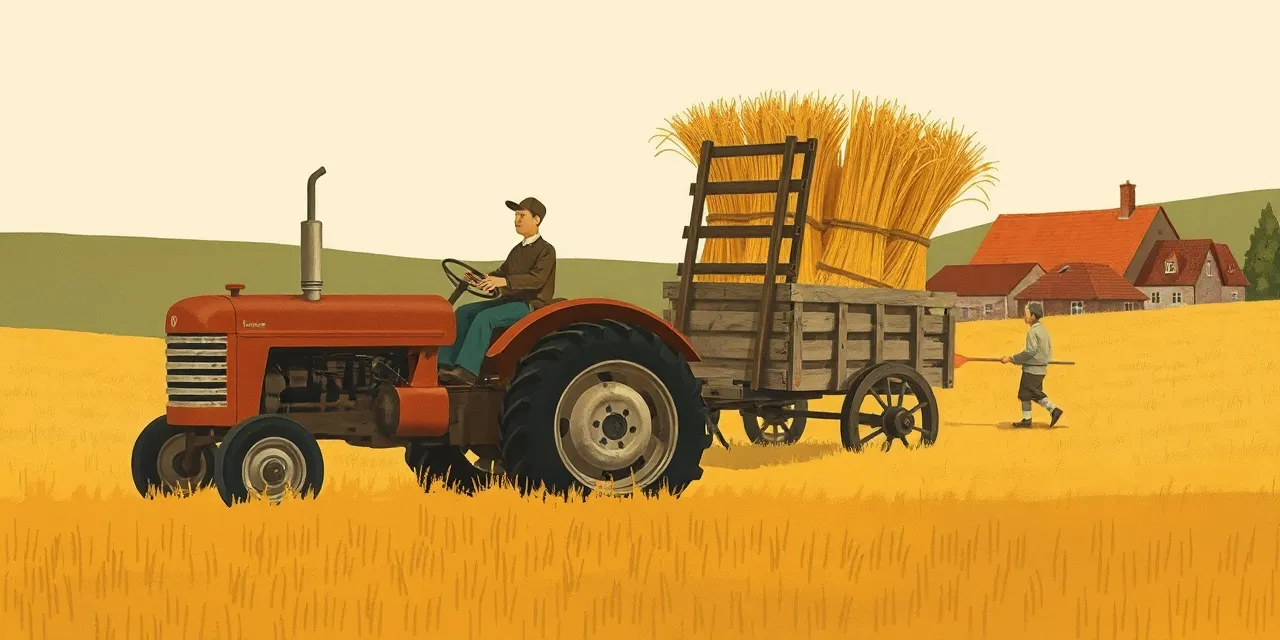
Nothing yet. Add some work with the plus buttons — say ten wagons of sheaves, like the farmer in the document's example.
And how much money was that?
Nobody knew tonight — not even the record-keeper. The value of a unit was calculated only after the year closed, according to how the cooperative had fared: only then were money and produce divided by the units collected. The same day's work could pay differently in every village and every year.
Type I and II cooperatives did not use work units at all — a fulfilled quota was paid directly in crowns. That, too, is written in the museum's document.
For scale, from the document: a farmer who loaded 10 wagons of sheaves earned 1.56 units. Twelve hours at the threshing machine earned 2.1 units.